
ExpatAdminHubEuropean expat guide
FR
Menu▾
HomePrivacyCookiesAboutContact
All guidesPreparationHousingFinanceHealthcareWorkFamily
ExpatAdminHubEuropean expat guide
HomePrivacyCookiesAboutContact
Categories
All guidesPreparation (checklists, visas, moving)Housing (rentals, utilities, neighborhoods)Finance (banking, taxes, budgeting)Healthcare (insurance, doctors, pharmacies)Work (jobs, contracts, work permits)Family (schools, childcare, family life)Culture (language, customs, integration)
FR

ExpatAdminHub

Practical guides for European expats navigating admin, housing, healthcare, and everyday life abroad.

Navigation

HomeAboutContactPrivacyTermsSitemap

Stay Updated

1 tip per week, no spam.

© 2025 ExpatAdminHub · European expat guide.
FR
  1. Home
  2. Blog
  3. Culture
  4. Best Christmas Markets in Europe 2025: From Strasbourg to Montreux (and How to Plan Smart as an Expat)
Best Christmas Markets in Europe 2025: From Strasbourg to Montreux (and How to Plan Smart as an Expat)

Best Christmas Markets in Europe 2025: From Strasbourg to Montreux (and How to Plan Smart as an Expat)

Published December 1, 2025

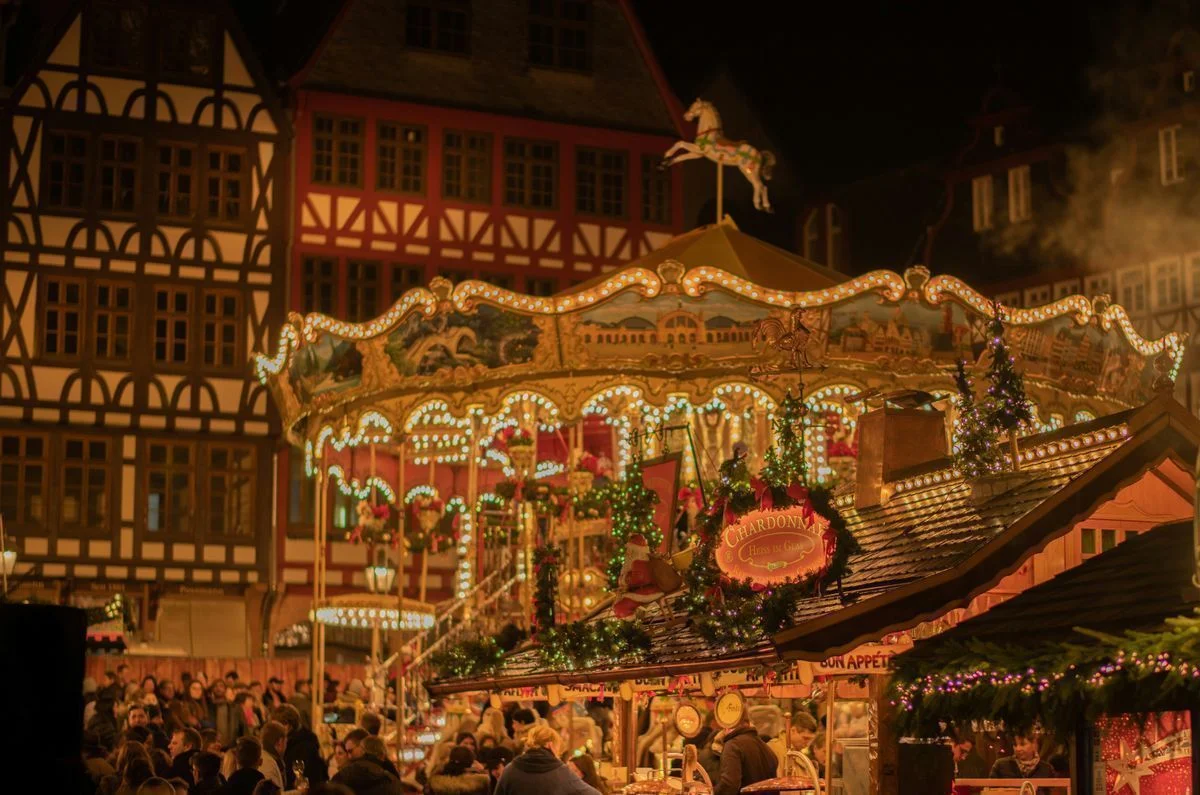
For many expats, the first real European culture shock is not the paperwork, it is Christmas. Lights everywhere, mulled wine legally sold in the street, fully booked trains weeks ahead, and city centres turned into movie sets. This year you might want to finally see the big European Christmas markets – from Strasbourg to Montreux, via Vienna, Prague or Budapest – but without getting trapped by logistics: train tickets, insurance, health cards, reservations, ID checks. This guide lists some of the most interesting 2025 markets, with dates, official websites and a short admin note for each destination.

1) How to use this guide

Each market in this guide comes with:

  • Why go (atmosphere, style, for which type of expat);
  • 2025 dates (always double-check before you book);
  • Official website;
  • Admin note: transport, documents, insurance, crowd level, local rules.

The goal is to inspire you but also to help you avoid classic expat mistakes such as arriving without reservations, travelling without a valid health card or forgetting that the old town is closed to cars.

For the healthcare and insurance side of your trip, you can also read European healthcare 2025: what changes for expats (European healthcare 2025) and the guide on the European Health Insurance Card (European Health Insurance Card).

2) Strasbourg, France – capital of Christmas

Why go?

It is the benchmark. Multiple markets across the old town, very traditional decorations, a huge Christmas tree and a strong sense of ritual. Many expats feel they should do Strasbourg at least once in their European life.

Key 2025 facts:

  • Opening planned around 26 November 2025 at 2 pm, then running into late December (check the official programme before booking).
  • Official site: noel.strasbourg.eu.

Admin note for expats:

  • The city centre becomes largely pedestrian only; use trains or park-and-ride car parks plus the tram.
  • Security is strict: avoid large bags and keep your passport or ID card handy.
  • If you come from another EU country, bring your European Health Insurance Card (EHIC or GHIC) and consider travel insurance, especially if you plan a multi-country trip.
  • For families, agree on a meeting point in case you get separated; evening and weekend crowds can be very dense.

3) Colmar and Alsace, France – postcard villages

Why go?

Colmar and the nearby villages (Riquewihr, Kaysersberg, Ribeauvillé and others) are what many people imagine when they think of a European Christmas: half-timbered houses, canals, garlands everywhere and several small themed markets instead of a single giant one.

Key 2025 facts:

  • Main season runs from late November to early January 2026, with different markets and side events across the region.
  • Colmar site: noel-colmar.com.
  • Alsace regional overview: christmas.alsace.

Admin note for expats:

  • Colmar’s old town is often closed to cars at peak times; plan to park outside or arrive by train.
  • December weekends are extremely crowded; if you dislike crowds, choose a Monday or Tuesday and use official shuttles listed on the website.
  • You can easily combine Strasbourg and Colmar in one long weekend, but only if you book accommodation early – especially with children.

4) Basel, Switzerland – classic Swiss Christmas

Why go?

Basel offers one of Switzerland’s most atmospheric markets, in a compact historic centre that is easy to explore on foot. It feels festive without being overwhelming.

Key 2025 facts:

  • Dates announced for 27 November to 23 December 2025 (always confirm exact dates and opening hours before you travel).
  • Official site: basel.com – Christmas.

Admin note for expats:

  • Currency is Swiss francs (CHF). Many stalls accept cards, but not all, so plan some cash.
  • Coming from the EU, check that your health cover and travel insurance explicitly include Switzerland, which is outside the EU and EEA.
  • Cross-border workers should double-check how their LAMal or CMU coverage applies on each side of the border.
  • If you are used to EU pricing, remember that Swiss transport and food can feel expensive; build this into your budget.

5) Montreux Noël, Switzerland – lakeside magic and Santa

Why go?

Montreux mixes wooden chalets along Lake Geneva, mountain views, a flying Santa show, the train to Santa’s House and a decorated Chillon Castle. It is very family-friendly but still magical for adults.

Key 2025 facts:

  • Main market dates are expected from 20 November to 24 December 2025.
  • Official site: montreuxnoel.com.

Admin note for expats:

  • Very popular with Swiss and French families, especially on weekends; book trains and hotels early if you want Santa’s House or lake-view rooms.
  • Check weather and snow conditions before going up to Rochers-de-Naye by train.
  • Consider whether you need a multi-currency card for CHF payments; services such as Wise or Revolut can help keep fees under control.
  • If you combine Montreux with Basel or other Swiss cities, track your total transport budget: Swiss trains are excellent but not cheap.

6) Vienna, Austria – romantic imperial backdrop

Why go?

Vienna offers several markets with very different atmospheres: the big, busy one on Rathausplatz, more local options in neighbourhoods and elegant settings at Schönbrunn or Belvedere. It is a strong choice for couples or friends who enjoy culture as much as Christmas lights.

Key 2025 facts:

  • Rathausplatz market usually runs from mid-November; for 2025, dates are expected from 14 November to 26 December.
  • Main site: christkindlmarkt.at.
  • City overview: austria.info – Christmas markets in Vienna.

Admin note for expats:

  • December is peak season in Vienna; book flights or trains and accommodation well in advance, especially for Advent weekends.
  • Many visitors combine a market visit with a classical concert; check cancellation and refund rules on tickets.
  • If you live elsewhere in the EU, your European Health Insurance Card should cover emergencies, but travel insurance remains useful for delays and cancellations.
  • For a deeper look at how healthcare rules and residency interact across Europe, see European healthcare 2025 and EU residency changes 2025.

7) Prague, Czechia – compact winter fairy tale

Why go?

Prague’s Old Town Square and Wenceslas Square host two of the best-known markets in Central Europe, and the historic centre is very walkable. It is ideal for a two- or three-day winter city break.

Key 2025 facts:

  • Main markets in Old Town and Wenceslas Square usually run from 29 November 2025 to 6 January 2026.
  • Official information: prague.eu – Christmas markets.

Admin note for expats:

  • Prague is very busy around Christmas and New Year; expect higher prices and crowds in prime areas.
  • Watch out for classic tourist traps such as unlicensed taxis or aggressive currency-exchange offices; use ATMs from well-known banks instead.
  • Keep all booking confirmations (transport, hotels, rentals) easily accessible, including offline copies.
  • For multi-country trips in Central Europe, make sure you understand your Schengen days and cross-border health coverage.

8) Budapest, Hungary – best magic-to-price ratio

Why go?

Budapest often appears in rankings of Europe’s most beautiful Christmas markets. The markets at St Stephen’s Basilica and Vörösmarty Square are especially photogenic, and prices are still relatively reasonable compared with Western capitals.

Key 2025 facts:

  • Main markets typically run from mid-November to early January; recent editions had Basilica roughly from 14 November to 1 January and Vörösmarty until 31 December.
  • Basilica site: adventbazilika.hu.
  • More information: budapestchristmas.com.

Admin note for expats:

  • Hungary is in the EU but not in the euro; a low-fee card for payments abroad such as Wise, Revolut or N26 can quickly pay for itself.
  • Check how your home country’s healthcare system covers you abroad and whether you need extra travel insurance.
  • If you work remotely across borders or have income in several countries, see Digital nomads 2025: new rules on taxes and visas before extending your stay.

9) Zagreb, Croatia – award-winning outsider

Why go?

Advent Zagreb often appears in lists of Europe’s best Christmas markets. Instead of focusing everything on one square, the city spreads events and stalls across several locations, which makes the experience feel more like a festival than a single market.

Key 2025 facts:

  • The season usually runs from late November to early January; precise dates are confirmed each year.
  • Official site: adventzagreb.hr.

Admin note for expats:

  • Croatia is now part of the eurozone, which simplifies payments and budgeting for many expats.
  • EU-resident expats can normally use their European Health Insurance Card for emergency care, but travel insurance remains useful for repatriation and extras.
  • Zagreb can be an interesting alternative if classic markets like Vienna or Prague are fully booked or too expensive for your dates.

10) Admin checklist for Christmas-market trips

Before you go, make sure you cover the basics:

  • Confirm dates and opening hours on the official website a few days before travelling.
  • Check ID or passport validity and, if relevant, visa or residence card rules.
  • If you are a non-EU national in Schengen, make sure your allowed days in the area are not exceeded.
  • Verify your health cover (national system, EHIC or GHIC if you have one, plus travel insurance).
  • For cross-border trips such as France–Switzerland or EU–non-EU, think about currency, roaming charges and bank-card fees.
  • Screenshot or download your tickets, booking confirmations and insurance documents so that you can show them even without a connection.

If your Christmas-market tour is also your first test of life in Europe, you can pair this checklist with broader guides such as EU residency changes 2025 and Schengen biometric systems and ETIAS.

Frequently Asked Questions

Which Christmas market should I pick if I hate crowds?

Avoid Strasbourg and Colmar on December weekends. Choose a weekday instead, or calmer options such as Basel, some of the smaller Vienna markets or secondary destinations like Graz that have a softer atmosphere.

Do I need special insurance to visit several Christmas markets in different countries?

If you are resident in an EU country with a valid EHIC or GHIC, you are normally covered for emergency care at local rates, but travel insurance is still useful for cancellations, lost luggage and repatriation, especially on multi-country trips.

Stay updated

For more practical insights on this topic, explore our related articles:

  • Administrative Burnout: Why Expats Struggle More in Europe in 2025 — And the Systems That Actually Fix It
  • Europe in Winter 2024–2025: The 10 Most Unexpected Expat-Friendly Cities to Live, Work, and Thrive — With Real Costs, Admin Tips & AI Tools
  • Europe’s New Digital Admin Trap: What Happens When Your Entire Life Depends on One App?
  • Winter Travel 2025: Strikes, Snow, Passenger Rights and the Essential Expat Survival Guide

Conclusion: European Christmas markets are beautiful, but they are not theme parks – they are real city centres, with rules, crowds and logistics. As an expat, you often juggle more variables than tourists do: residence permits, health coverage, cross-border tickets and sometimes children in tow. If you prepare the admin side early – documents, insurance, transport and accommodation – you can enjoy the magic without unnecessary stress.

Stay Updated

1 tip per week, no spam.

About the author:

Related posts

Administrative Burnout: Why Expats Struggle More in Europe in 2025 — And the Systems That Actually Fix It
Culture•December 13, 2025

Administrative Burnout: Why Expats Struggle More in Europe in 2025 — And the Systems That Actually Fix It

Expat life in Europe is often portrayed as a lifestyle upgrade — better cities, better healthcare, better work–life balance. Yet behind this narrative, a growing number of expats report something rarely discussed: administrative burnout. In 2025, bureaucracy is no longer just inconvenient; it is a cognitive, emotional, and financial drain that affects productivity, mental health, and long-term integration. Recent surveys show that **43% of expats in Europe cite administrative complexity as a primary source of stress**, outranking language barriers and cultural adjustment. This article explains why expats are disproportionately affected, how European administrative systems amplify this fatigue, and which concrete systems — human and AI-driven — actually reduce the burden.

Read the article


Europe in Winter 2024–2025: The 10 Most Unexpected Expat-Friendly Cities to Live, Work, and Thrive — With Real Costs, Admin Tips & AI Tools
Culture•December 11, 2025

Europe in Winter 2024–2025: The 10 Most Unexpected Expat-Friendly Cities to Live, Work, and Thrive — With Real Costs, Admin Tips & AI Tools

Europe transforms in winter. While tourists chase Christmas stalls, expats and cross-border professionals quietly look for something much more strategic: a city where life is stable, affordable, inspiring, and administratively manageable. This guide highlights ten unexpected, data-backed cities where expats can genuinely thrive during the 2024–2025 winter season — not because of their postcard aesthetics, but because of their cost of living, work opportunities, housing accessibility, integration potential, and administrative simplicity.

Read the article
Europe’s New Digital Admin Trap: What Happens When Your Entire Life Depends on One App?
Culture•December 10, 2025

Europe’s New Digital Admin Trap: What Happens When Your Entire Life Depends on One App?

In 2025, a silent transformation affects every expat in Europe: nearly every task—healthcare, payments, travel, identity verification, reimbursements, job contracts, even crossing borders—now depends on a single app, a central digital portal, or a unified electronic identity. Convenient? Absolutely. But also fragile. What happens if the app goes down, if your ID stops being recognised, or if a country changes its rules overnight? This long-form article explores a trending but underreported issue: the fragility of Europe’s new digital administrative ecosystem, and how expats can protect themselves.

Read the article